
The True Value of Cold-Pressed, Unrefined Oils
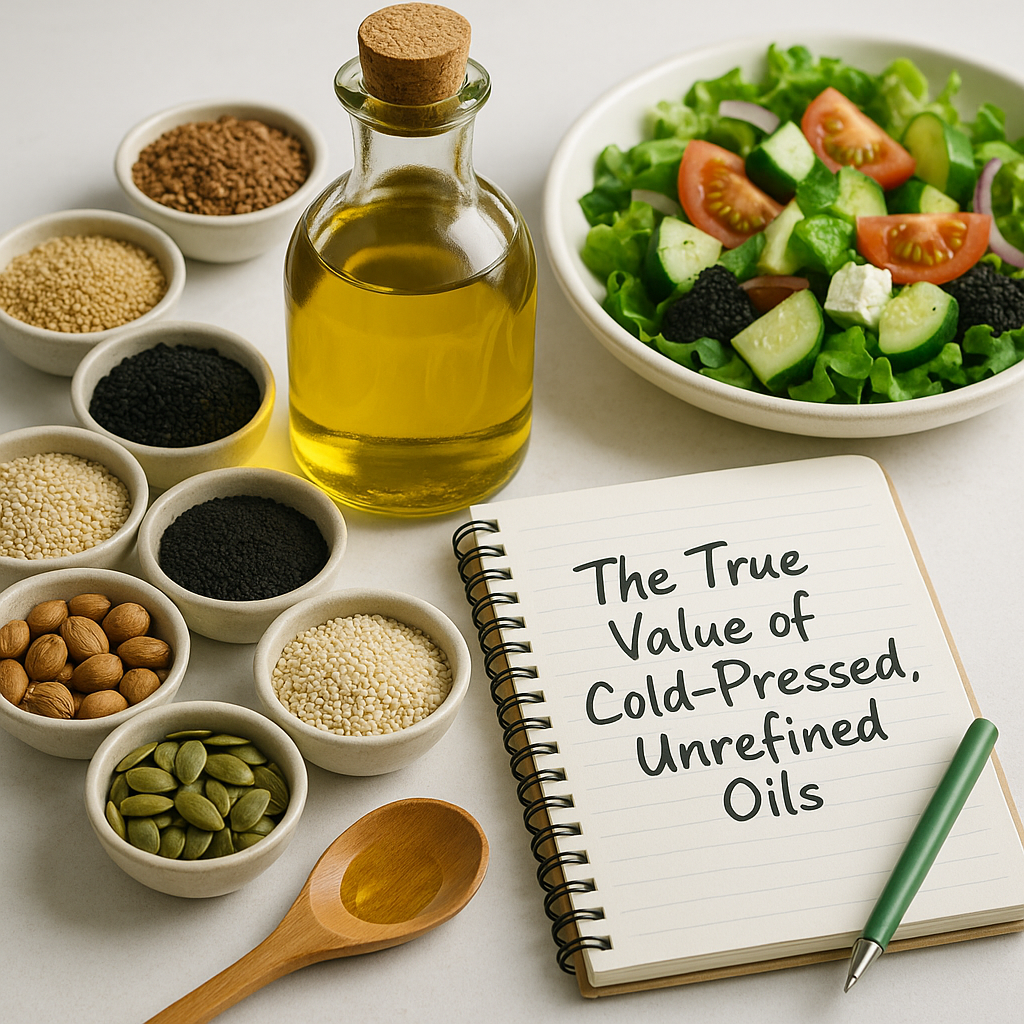
Not all plant oils are made the same way. At Natura Harmony, we produce 100% pure, cold-pressed, unrefined oils with care for flavour and for the planet. Here’s what makes them special and how they fit into everyday cooking.
What Are Cold-Pressed, Unrefined Oils?
Cold-pressing is a mechanical method of extracting oil from seeds and nuts at low temperatures, typically below 40°C. This helps keep the natural flavour and aroma.
Unrefined means nothing is added, removed or altered after pressing. No bleaching. No deodorising. No additives. This is exactly how we make oils at Natura Harmony: pure and intact, just as nature intended.
Why temperature control matters
Heat-sensitive compounds like vitamin E, polyphenols and essential fatty acids break down quickly at high temperatures, and delicate flavours go with them. By keeping the process cold and controlled, Natura Harmony protects the natural character of every oil.
Why 100% Unrefined Mono-Oils Matter
Many commercial oils are blends. While that’s not inherently bad, it often obscures the origin and quality of the ingredients. At Natura Harmony, we press one type of seed or nut at a time. No blends, no dilutions. That’s how we give you full traceability: whether it is black cumin seed oil, pumpkin seed oil or walnut oil, you know exactly what is in the bottle.
Oils in Everyday Cooking
Food labels in the UK use reference intakes based on an average adult eating 2,000 kcal a day:
- Protein: 50 g
- Fat: 70 g
- Carbohydrates: 260 g
As cold-pressed oils are pure fats, just 1 tablespoon (15 ml) contains around 120 kcal. That’s why it’s worth monitoring your fat intake, especially if you enjoy adding oil to salads and dressings.
Suitable for a Wide Range of Diets
Our unrefined oils are plant-based and carbohydrate-free, so they fit vegan, keto, low-carb and Mediterranean-style cooking.
Natura Harmony oils are certified by The Vegan Society, and our production process follows the ISO 22000 Food Safety Management System. We care about quality from seed to bottle.
What Is Naturally in Each Oil
Each oil in our range has its own natural make-up:
- Flaxseed Oil: Omega-3 ALA, lignans
- Black Cumin Seed Oil: Thymoquinone, antioxidants
- Walnut Oil: Omega-3 & 6, polyphenols
- Pumpkin Seed Oil: Omega-6, omega-3, vitamin E
- Sea Buckthorn Oil: Omega-7, beta-carotene
- Hemp Seed Oil: Balanced omega-3 to omega-6 ratio
- Camelina Oil: ALA, vitamin E
- Amaranth Oil: Squalene, tocopherols
- Sesame Seed Oil: Vitamin E, vitamin K, essential fatty acids
- Poppy Seed Oil: Essential fatty acids, vitamin E
- Rosehip Oil: Vitamins A and C, essential fatty acids
- Coconut Oil: MCTs (medium-chain triglycerides)
- Corn Oil: Linoleic acid, phytosterols
- Thistle Oil: Silymarin, antioxidants
- Grape Seed Oil: Proanthocyanidins, linoleic acid
- Wheat Germ Oil: High vitamin E, octacosanol
- Sunflower Oil (from dried seeds): Vitamin E, rich aroma
- Hazelnut Oil: Oleic acid, vitamin E
- Apricot Kernel Oil: Monounsaturated fats, omega-6, vitamin E
- Chia Seed Oil: ALA (omega-3)
- Black Sesame Seed Oil: Vitamin E, plant sterols, polyunsaturated fats
Final Thought: Choose Oils with Purpose
There are many types of oils: cold-pressed or hot-pressed, refined or unrefined. Each has its use. If you prefer simple, natural ingredients, choose oils that suit the way you cook.
Try Natura Harmony oils, filtered with care.
Be one with nature.